
Paramveer Polytechnic College was established in the year 2009 with the vision of providing quality technical education to students from rural and semi-urban backgrounds.
Paramveer Polytechnic College was established in the year 2009 with the vision of providing quality technical education to students from rural and semi-urban backgrounds.
The Diploma in Electrical & Electronics Engineering (DEEE) is a three-year full-time program designed to develop skilled professionals with strong knowledge in electrical power systems, electrical machines, electronics, control systems, and industrial applications. The program blends theoretical foundations with extensive practical training to meet the needs of power, manufacturing, automation, and service industries.
Electrical & Electronics Engineering plays a vital role in modern infrastructure, industrial automation, renewable energy, and smart technologies. This diploma program equips students with the ability to install, operate, maintain, and troubleshoot electrical and electronic systems while following safety, quality, and environmental standards.
The curriculum is designed as per the norms of the Directorate of Technical Education (DOTE), Government of Tamil Nadu, combining theory, laboratory practice, and industrial exposure.
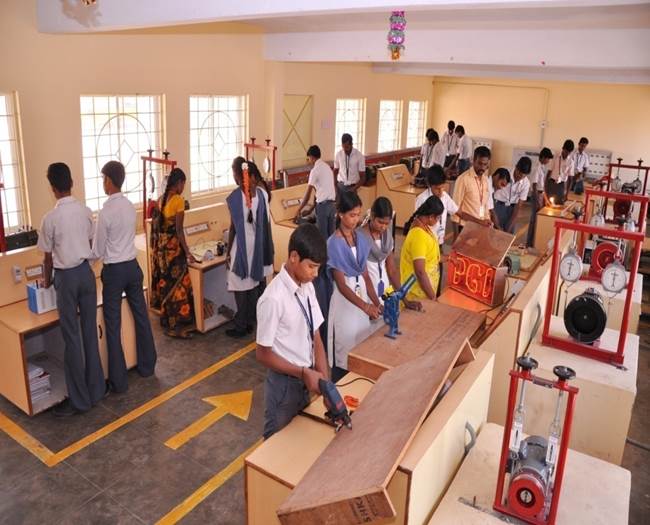
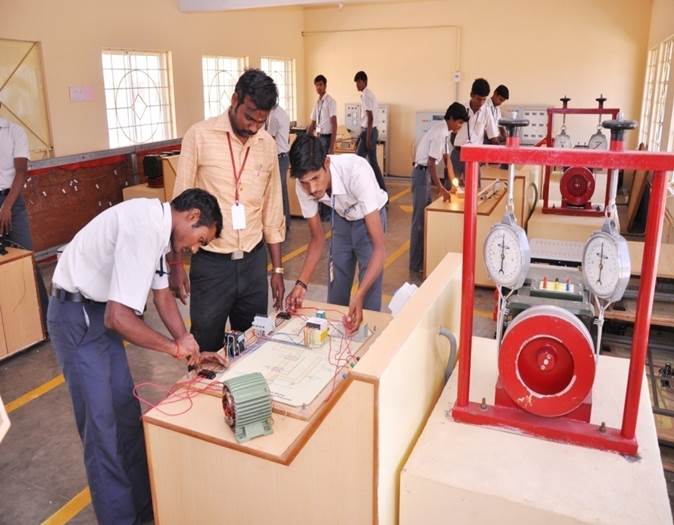
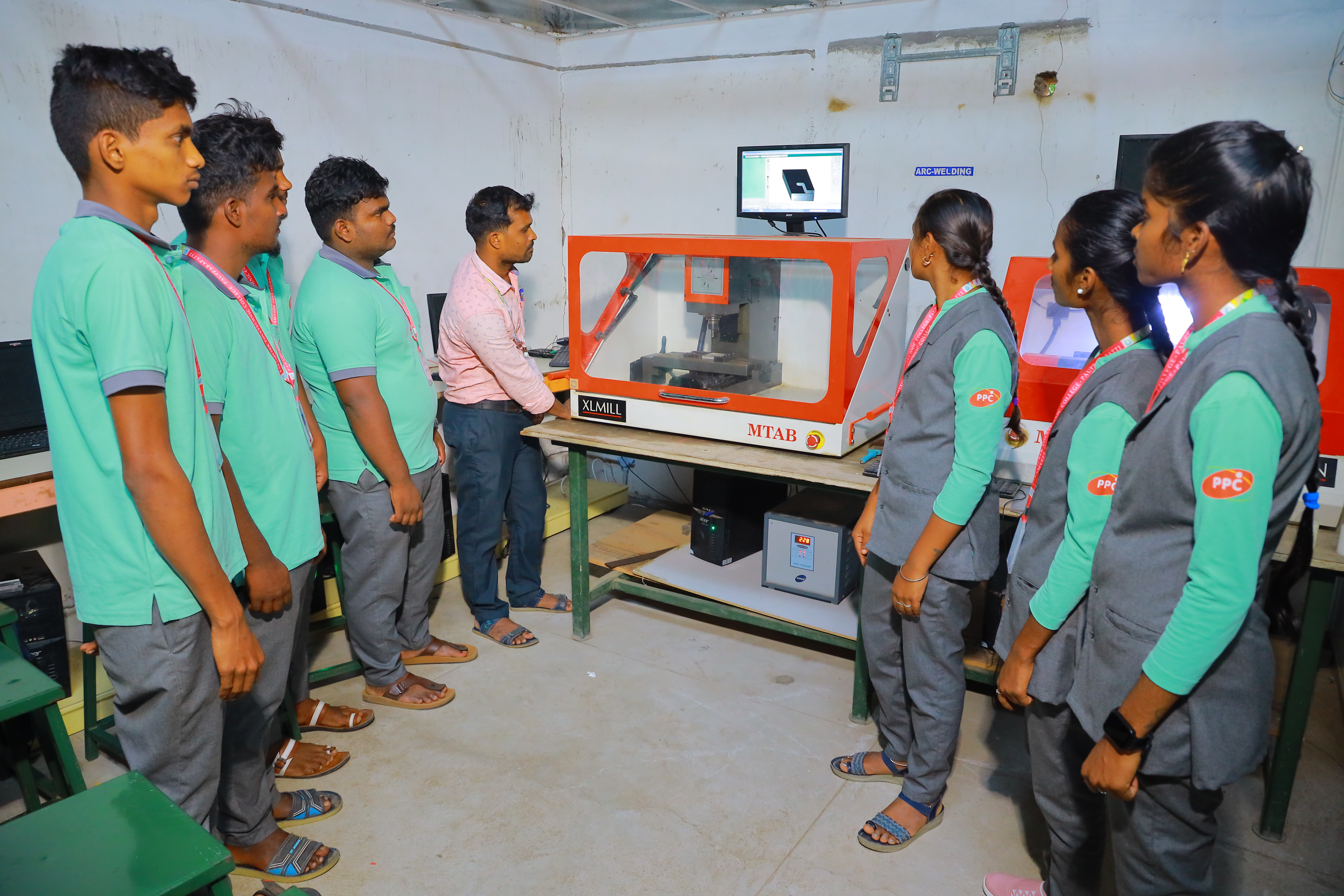
The program emphasizes experiential learning through well-equipped laboratories and workshops, including:
Students gain hands-on experience in wiring, motor control, testing of transformers, generators, and electrical machines.
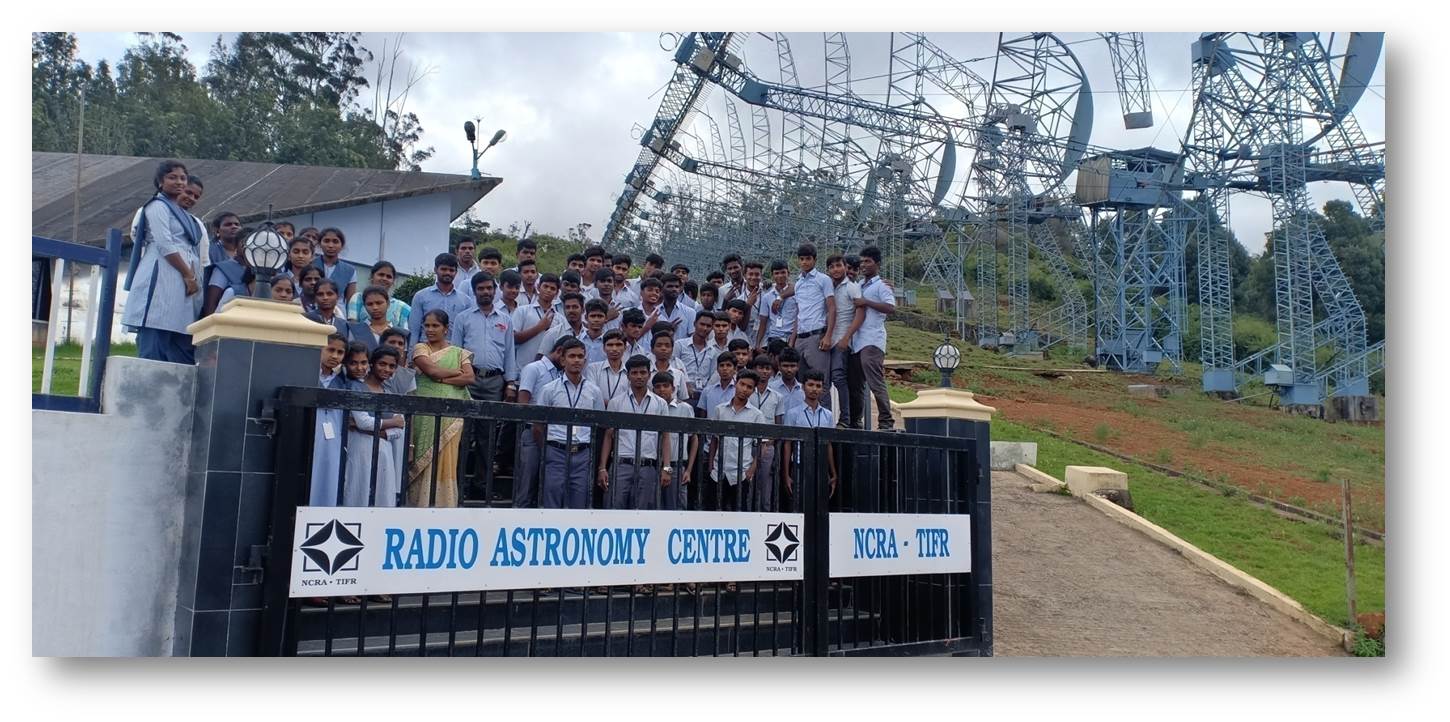
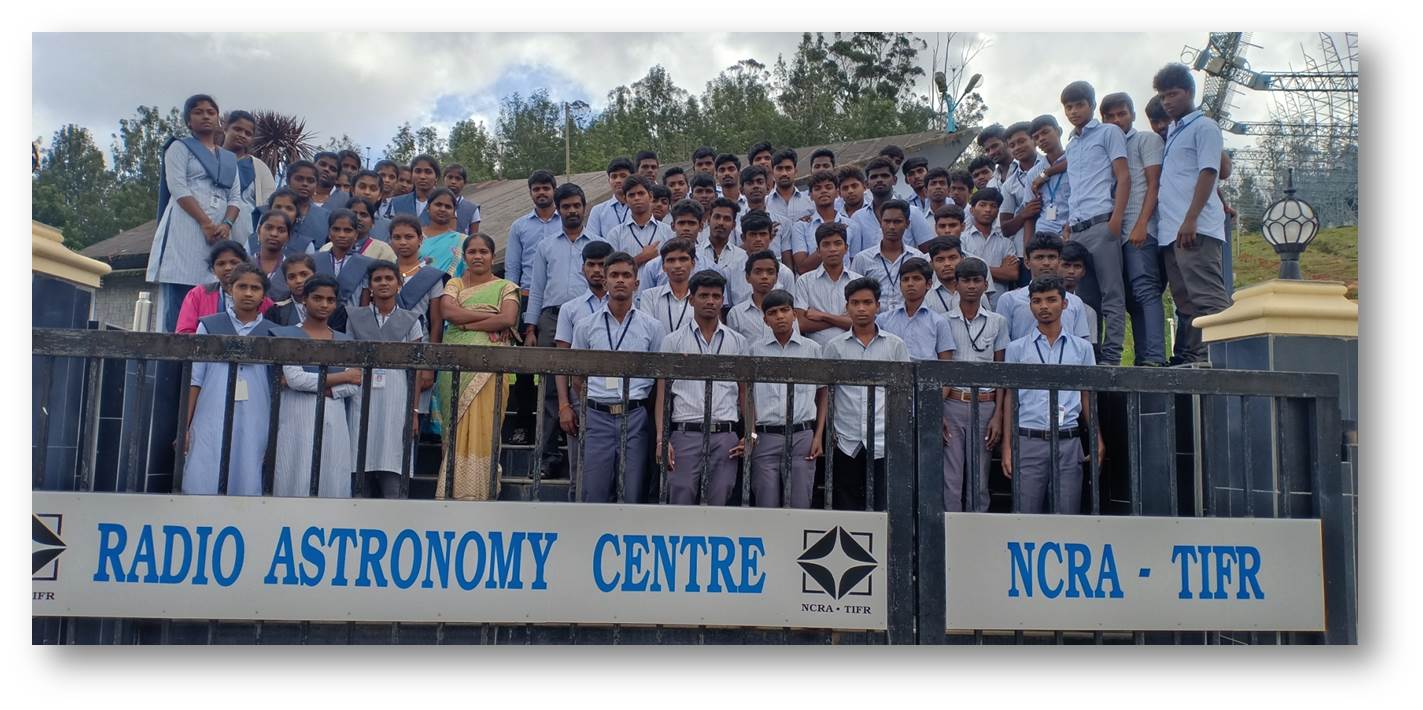
To enhance industry readiness and employability, the program provides:
After successful completion of the Diploma in Electrical & Electronics Engineering, students will be able to:
| S.No. | Program Outcome |
|---|---|
| PO1 | Apply basic mathematics, science, and electrical & electronics engineering fundamentals to solve engineering problems. |
| PO2 | Install, test, operate, and maintain electrical machines, power systems, and electronic circuits. |
| PO3 | Interpret electrical drawings, circuit diagrams, and technical specifications. |
| PO4 | Use appropriate tools and instruments for electrical measurements, testing, and troubleshooting. |
| PO5 | Identify and solve routine electrical and electronics engineering problems individually or in teams. |
| PO6 | Demonstrate professional ethics, discipline, and safety awareness in electrical environments. |
| PO7 | Communicate effectively through technical reports, drawings, and oral presentations. |
| PO8 | Apply environmental, energy efficiency, and sustainability principles in electrical engineering practices. |
| PO9 | Engage in lifelong learning and adapt to emerging electrical and electronics technologies. |
At the end of the Diploma in Electrical & Electronics Engineering program, students will be able to:
| S.No. | Course Outcome |
|---|---|
| CO1 | Explain fundamental concepts of electrical circuits, machines, and electronic devices. |
| CO2 | Perform installation, testing, and maintenance of electrical wiring and equipment. |
| CO3 | Analyze the operation and performance of transformers, motors, and generators. |
| CO4 | Use electrical measuring instruments and electronic testing tools accurately. |
| CO5 | Apply control systems and automation principles in industrial applications. |
| CO6 | Work with basic microcontroller and digital electronics systems. |
| CO7 | Follow electrical safety standards, regulations, and ethical practices. |
| CO8 | Assist in energy management and renewable energy applications. |